
Impermanence and the World of Dew
The Narrow Road to the Deep NorthThis flow traces the novel’s recurring awareness that lives, empires, memories, and even places pass away while experience remains intensely real in the moment.
increasing Bearing strength in each event
 decreasing
Bearing strength in each eventdecreasingA Child’s Island World
The World as It Is
A Small Known Place
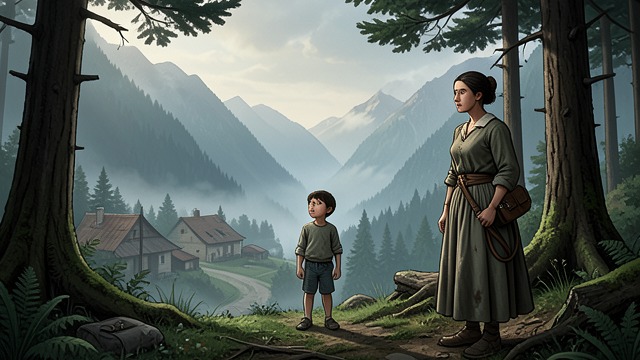
Dorrigo Evans’s childhood world is the remote community of Cleveland and the landscape around it. His mother answers questions about existence by saying that the world simply is.
A First Philosophy
The answer offers no explanation, but it becomes a durable way of meeting uncertainty. The novel returns to it when experience resists interpretation.
The Circle and the Line
Two Forms of Time
Shisui’s Circle
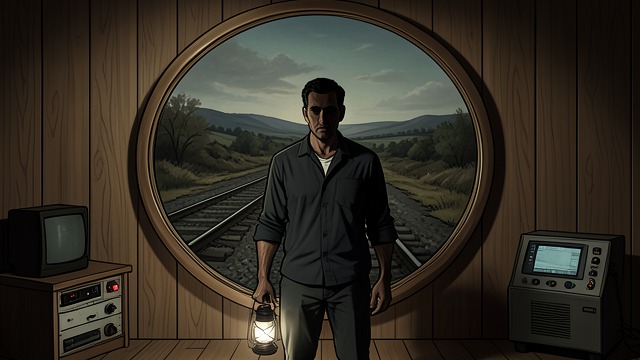
Dorrigo Evans learns of a poet whose death poem is a painted circle. He thinks of the circle as return and mystery, the opposite of the railway’s line from life toward death.
No Escape From Time
The shapes do not solve the experience of suffering. They give Dorrigo a way to compare repetition, progression, and the desire for an ending.
A World of Dew
A Brief Human World
Images of Transience
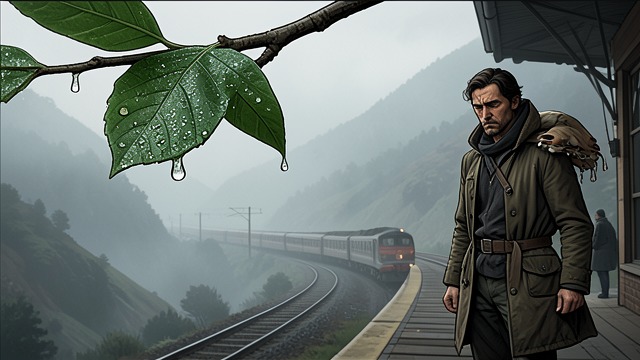
Issa’s poem presents the world as fragile and transient, yet insists on an unresolved “and yet.” The railway and its deaths are temporary in the landscape but not emotionally trivial.
No Final Consolation
Impermanence does not make suffering harmless. It places human life among countless forms of life that continue beyond human schemes.
The Fish Return to Water
Small Freedom
A Short-Lived Act
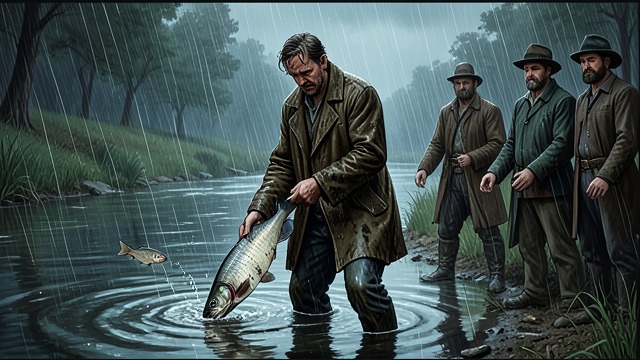
The former prisoners release the fish from Nikitaris’s Fish Shop. The act gives a few confined creatures a possible return to open water.
Beyond Human Memory
The gesture cannot preserve the men who died or make the war understandable. It nevertheless gives a brief, concrete form to care in a world that does not promise permanence.
The Crimson Flower
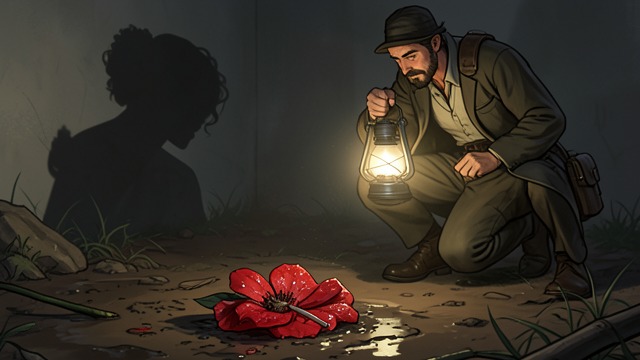
A Flower in the Rain
A Small Sight
Dorrigo Evans finds a crimson flower beside the muddy path after learning that Amy Mulvaney is listed among the dead. He stops to look at it beneath his lantern.
The Image Persists
The flower recalls Amy’s red camellia without restoring her. It holds beauty and loss together in a moment that offers no explanation or promise of permanence.
During Dorrigo’s early childhood in Tasmania
During Dorrigo’s old-age reflections on a Japanese death poem
At the close of the railway narrative, after the Line is abandoned
After the former prisoners release the fish in Hobart
On the night Dorrigo reads the report of Amy’s presumed death
